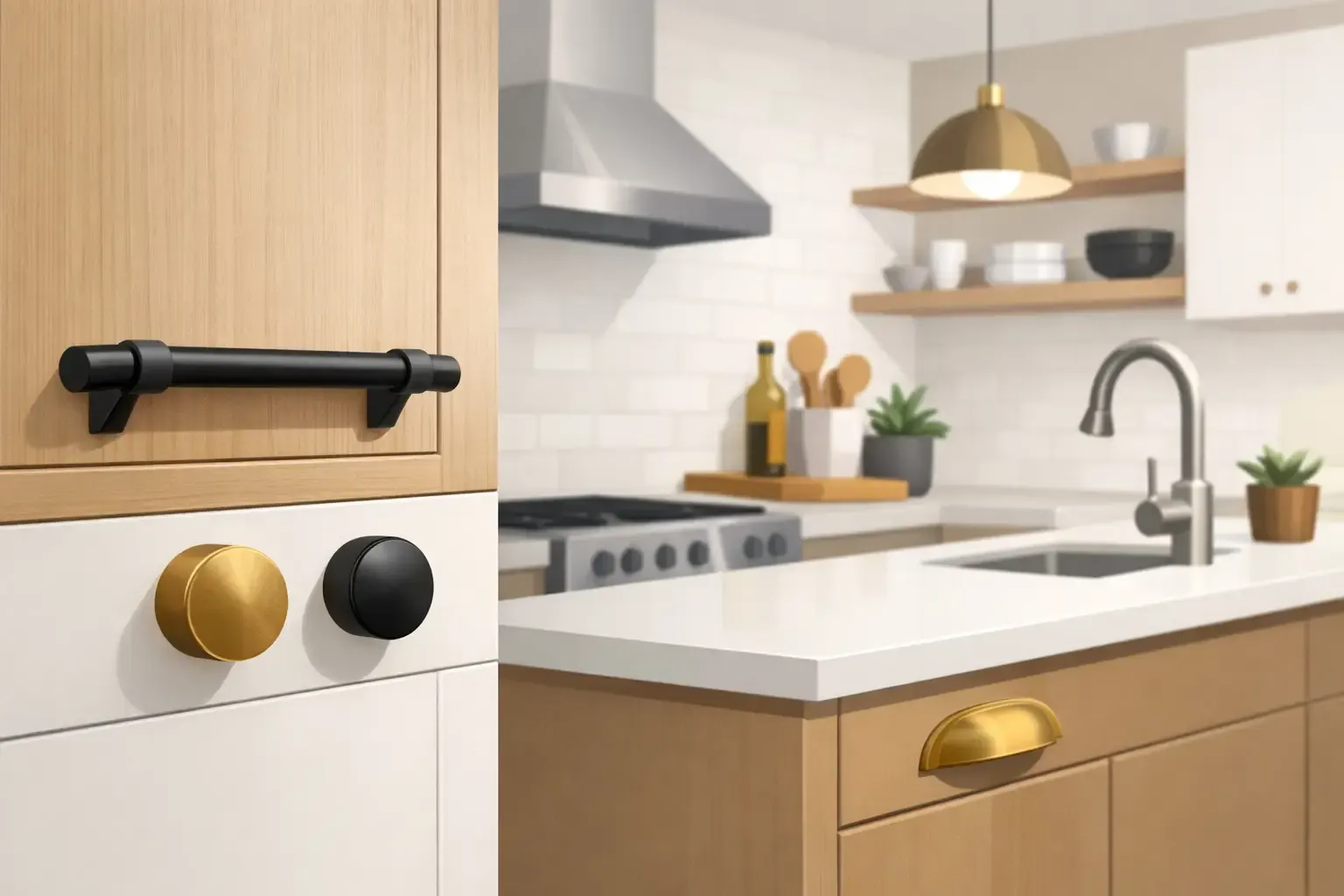
A kitchen can have beautifully built cabinets, fresh counters, and the right lighting, yet still feel unfinished when the cabinet hardware is an afterthought. Knobs, pulls, hinges, and latches are the parts you touch every day. They influence how your kitchen works, how it wears over time, and whether the finished room feels thoughtfully designed or pieced together.
For homeowners in Nashville, Brentwood, Franklin, and throughout Middle Tennessee, hardware is also one of the most effective ways to give a kitchen a more personal, elevated look without changing the entire cabinet plan. The right choice should feel good in your hand, suit the scale of the cabinetry, and support the way your household actually uses the room.
Why Cabinet Hardware Matters More Than You Think
Cabinet hardware is often described as the jewelry of the kitchen, but it does more than add polish. A pull that is too small can make wide drawers awkward to open. A finish that clashes with the faucet or lighting can make an otherwise cohesive room feel unsettled. Low-quality hinges can lead to doors that sag, bang, or need frequent adjustment.
Good hardware brings together the practical and visual sides of a remodel. It makes heavy drawers easier to use, protects cabinet finishes from fingerprints around door edges, and creates a rhythm across the room. In a busy family kitchen, those small improvements are felt every morning, every dinner rush, and every time friends gather around the island.
The best choice is not always the most expensive one. It is the one that matches the cabinet style, holds up to daily use, and fits comfortably within the overall project budget. That is why hardware deserves attention early in the design process, rather than becoming a rushed decision near installation day.
Start With the Style of Your Cabinets
Hardware should complement the cabinets, not compete with them. The door profile, wood species, paint color, and overall architecture of the home all help narrow the field.
Flat-panel or shaker cabinets are remarkably flexible. Long bar pulls can give them a tailored, contemporary appearance, while rounded knobs and cup pulls create a warmer, more traditional feel. In a classic Nashville home, brushed brass or aged bronze can bring character to painted cabinetry without making the room feel overly formal.
Slab-front cabinets tend to look best with clean, minimal hardware. Slim pulls, edge pulls, or carefully selected knobs preserve the quiet lines of the design. Ornate pieces can work, but they need to be intentional. Too much detail on a simple cabinet front can make the kitchen feel busy.
For raised-panel, inset, or more traditional custom cabinetry, hardware with gentle curves, texture, or a historic influence can add depth. Think substantial knobs, bin pulls, or softly shaped handles rather than highly angular bars. The goal is not to recreate a period kitchen exactly. It is to choose details that feel appropriate to the home and will still feel right years from now.
A mixed approach can also work beautifully. Many kitchens use knobs on upper doors and pulls on lower doors and drawers. This gives the room variation while keeping operation easy. The key is selecting pieces from the same finish family and visual style so the combination looks planned.
Choose Cabinet Hardware That Fits Your Hands and Your Drawers
A hardware sample may look perfect on a showroom board but feel entirely different once it is mounted on a full-size drawer. Comfort matters, especially in kitchens with deep pots-and-pans drawers, pullout trash cabinets, or large pantry doors.
For drawers, pulls are usually the practical choice. They give you more grip and distribute force across the drawer front. Wider drawers generally need longer pulls, two pulls, or a more substantial style that looks balanced. A tiny knob centered on a wide drawer can appear lost and may be frustrating to use when the drawer is loaded.
There is no single measurement that works for every kitchen, but proportion is a useful guide. A pull often looks balanced when its length is roughly one-third of the drawer width. On very wide drawers, two pulls may create a more symmetrical look and make opening easier. If you prefer a clean, modern appearance, a single longer pull can be the better choice.
For cabinet doors, knobs work well on smaller doors and lighter-use areas. Pulls are often easier for tall pantry doors, refrigerator panels, and heavy cabinet doors. Before committing, hold several samples. Make sure fingers do not hit the cabinet face behind the pull and that the grip feels comfortable for everyone in the home.
Placement matters just as much as size. On shaker doors, hardware is commonly positioned near the corner where the stile and rail meet. On drawers, it is usually centered. Those conventions create a clean appearance, but they are not rules that should override function. Tall cabinets, appliance panels, and specialty storage often benefit from a custom placement plan.
Select a Finish That Works With the Whole Room
Hardware finishes do not have to exactly match every metal in the kitchen. In fact, a space can feel more collected and welcoming when it includes two complementary finishes. What matters is that the combination feels deliberate.
Brushed nickel remains a dependable choice because it is versatile, understated, and forgiving of everyday fingerprints. Matte black creates contrast on white, natural wood, and light gray cabinetry, especially in transitional or modern kitchens. Polished chrome offers a brighter, more classic look and pairs naturally with many stainless appliances.
Warm metals such as brushed brass, champagne bronze, and antique brass bring richness to painted cabinets and can soften a room with stone, tile, and cooler colors. Their trade-off is visibility: some living finishes develop character over time, while others show marks more readily. If a perfectly uniform appearance is important, select a finish designed for consistency and ask about its expected maintenance needs.
When mixing metals, choose one finish to lead and one to support it. For example, a kitchen might use warm brass hardware with a black faucet or black lighting accents. Repeating each finish at least once helps the room feel connected. Trying to include too many unrelated metals can make selection feel accidental instead of refined.
Do Not Overlook Hinges, Drawer Slides, and Latches
Visible knobs and pulls receive the most attention, but concealed cabinet hardware has a major impact on daily comfort. Soft-close hinges prevent doors from slamming and protect both the cabinet box and the peace of the home. Full-extension drawer slides allow you to reach the back of a drawer without digging through its contents.
These details are especially worthwhile in a kitchen designed for real life. A well-built drawer should open smoothly even when it is loaded with dishes, cookware, or pantry staples. Heavy-duty slides may cost more than standard options, but they make sense for deep drawers and frequently used storage.
Specialty hardware can solve common frustrations as well. Pullout trash systems keep waste out of sight. Tray dividers organize baking sheets and cutting boards. Swing-out pantry storage can make better use of narrow spaces. These upgrades should be chosen based on your routines, not simply because they look impressive in a display kitchen.
Plan Hardware Before Installation Day
Hardware changes are easy to picture but surprisingly hard to reverse once holes have been drilled. A clear selection plan prevents last-minute substitutions, mismatched finishes, and placement decisions made under pressure.
Begin by identifying the hardware style and finish, then confirm the exact quantity needed for every door, drawer, panel, and specialty cabinet. Order a few samples before purchasing the full set. Place them against the actual cabinet color, countertop, backsplash, and nearby lighting. A finish that looks warm in a store may read very differently under the lighting in your home.
It is also wise to account for lead times and replacement availability. If a handle is damaged years from now, a widely available collection may be easier to match than a limited-run piece. For a custom kitchen, a cabinetry professional can create a placement layout before installation so every pull and knob aligns properly across the room.
At Tom Bell Cabinetry & Custom, those details are considered as part of the larger plan, not left to chance. The goal is a finished kitchen with cabinetry, millwork, storage, and hardware working together within a scope that respects your home and your budget.
The right hardware will not just photograph well on the day your remodel is complete. It will feel natural in your hand on an ordinary Tuesday morning, make daily tasks easier, and add one more reason to enjoy gathering in a kitchen that finally feels like yours.