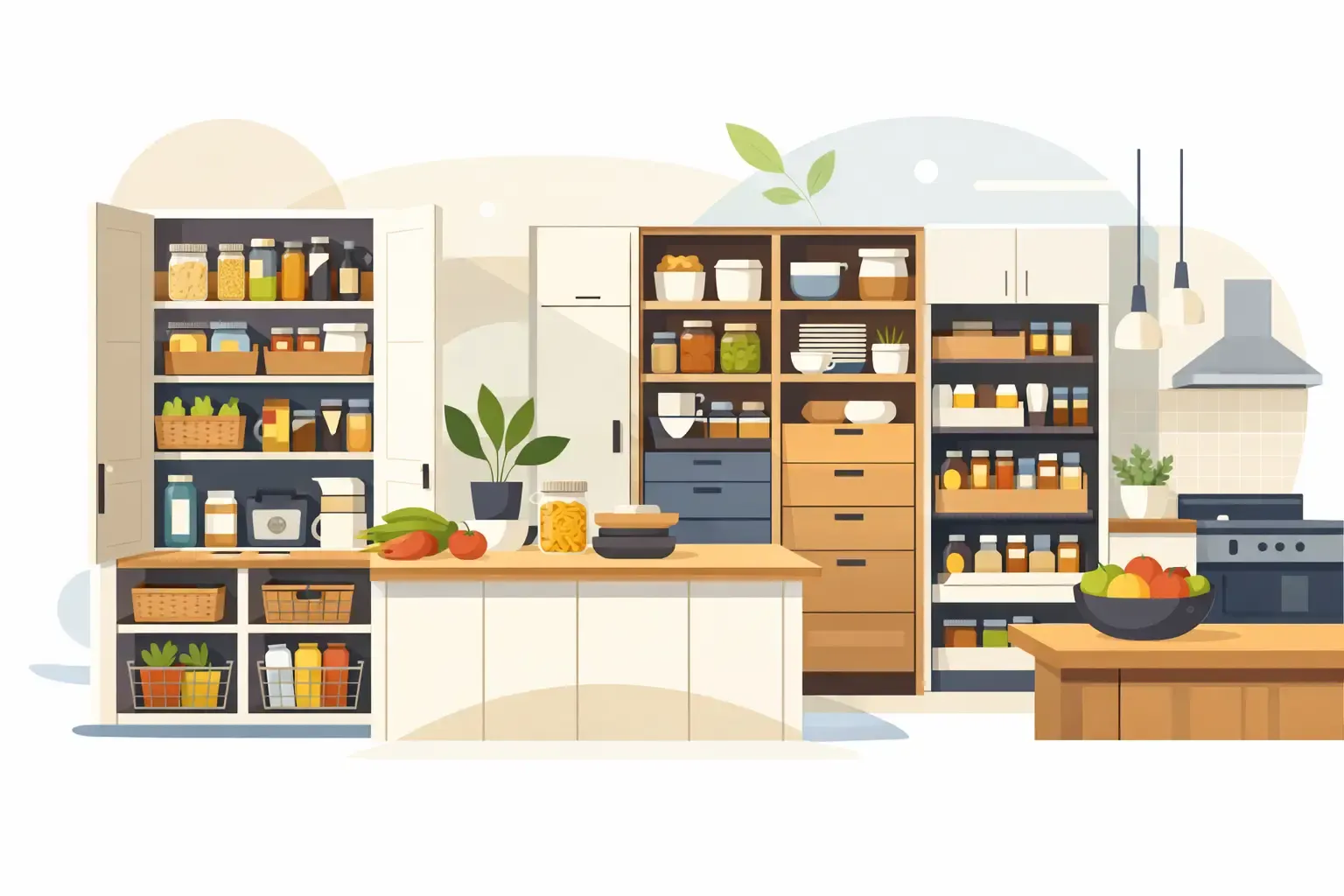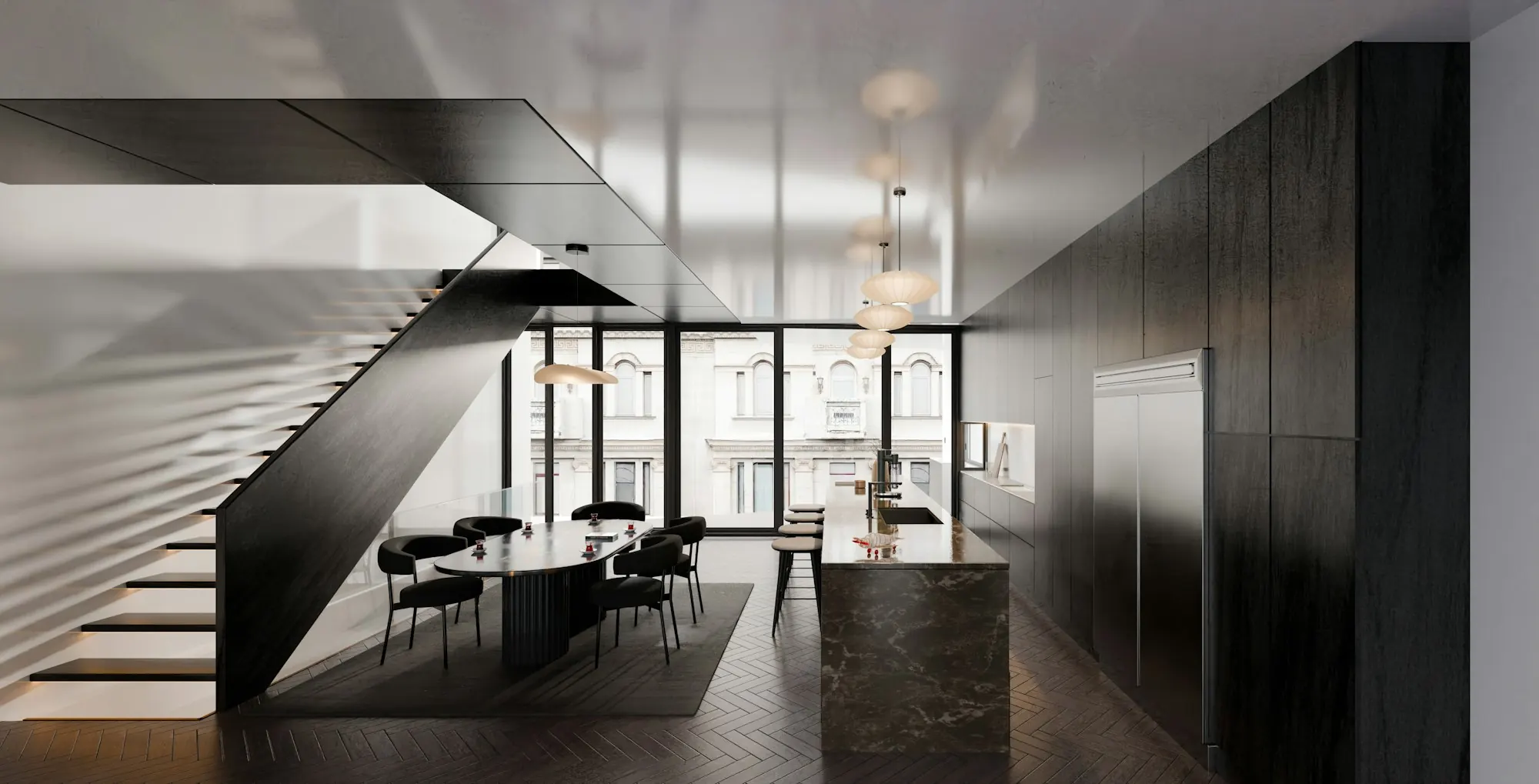
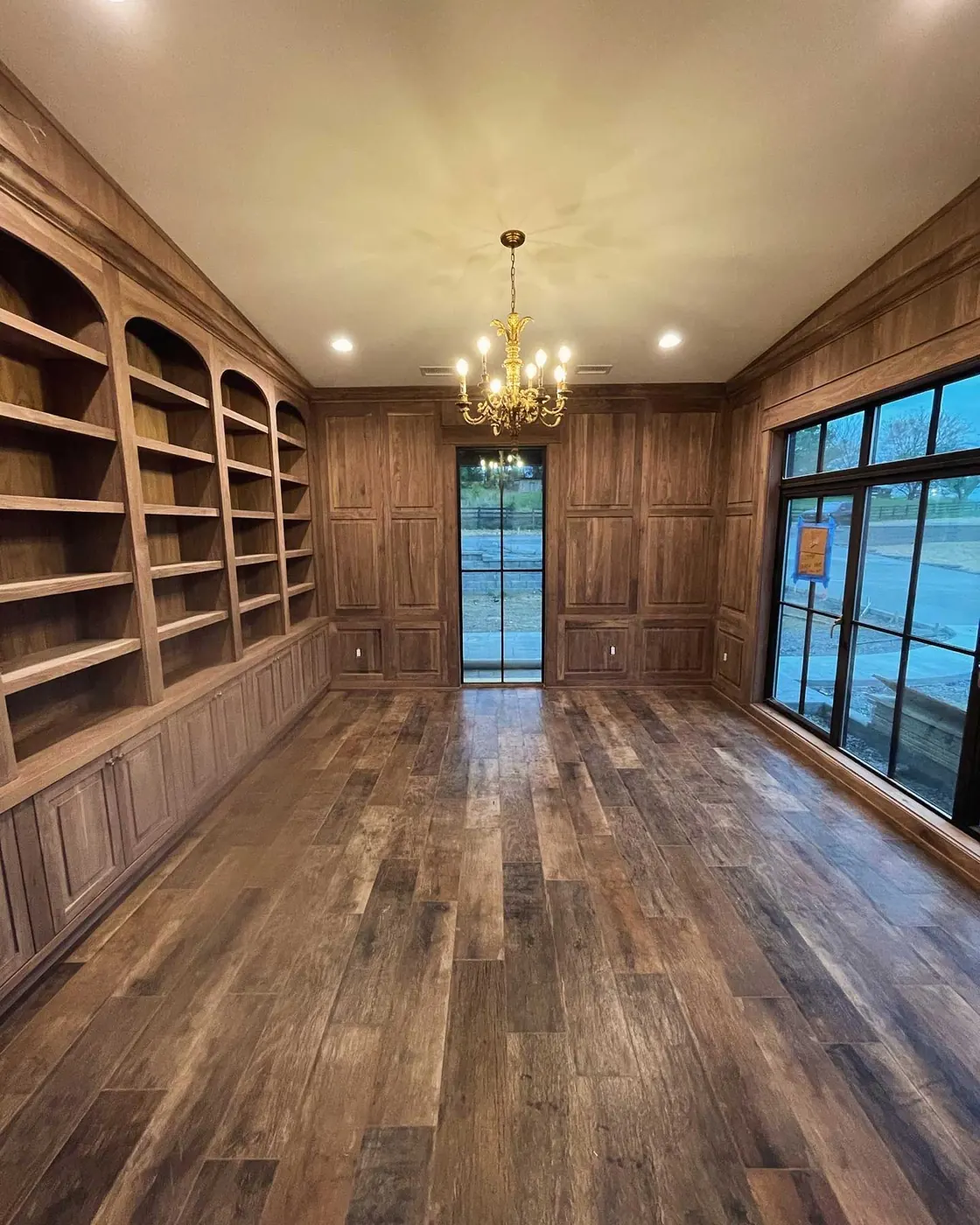
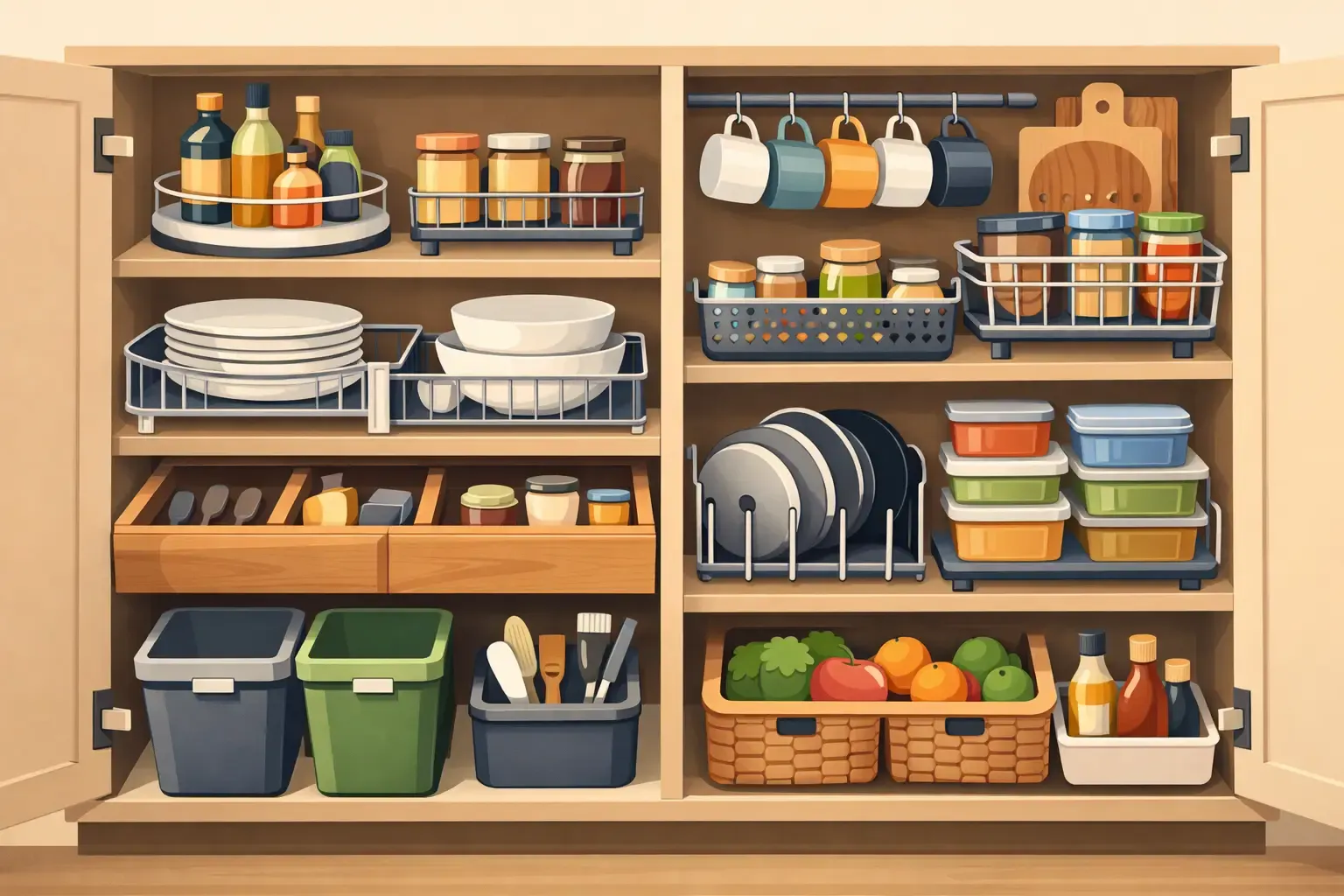
A beautiful kitchen can still feel frustrating when the cookware is stacked three deep, the spices disappear behind bottles, and the trash pullout is always in the way. The right kitchen cabinet organizers solve those daily annoyances at the source. They make the room easier to cook in, easier to clean, and more enjoyable to share with family and guests.
For homeowners planning a kitchen update in Nashville, Brentwood, Franklin, or Belle Meade, organization should not be an afterthought. It works best when it is considered alongside cabinet layout, appliance placement, and the way your household actually uses the kitchen. A well-designed cabinet is not just attractive from the outside. It gives every hardworking item a practical place to live.
Start With How Your Kitchen Really Works
The best organizer is not necessarily the one with the most features. It is the one that removes a repeated frustration from your day. Think about what happens when you make coffee in the morning, pack lunches, prepare a weeknight dinner, or clean up after company. Those routines reveal where storage is falling short.
A household that cooks often may benefit most from deep drawers near the range, divided storage for utensils, and a pullout pantry for ingredients. Someone who entertains may prefer dedicated space for serving pieces, wine glasses, or platters that are awkward to stack. If baking is a regular part of your routine, heavy mixers and sheet pans deserve a home that does not require lifting, digging, or rearranging.
Before choosing hardware or accessories, take a close look at what you own. Keep the tools you use, donate what no longer earns its space, and measure the larger items that need a dependable home. This simple step prevents a common mistake: installing a beautiful organizer that is the wrong size for the things it is meant to hold.
Kitchen Cabinet Organizers That Earn Their Space
Some storage solutions make a dramatic difference in almost any kitchen. Others are highly specific to the homeowner. The right mix depends on cabinet dimensions, budget, and whether you are updating existing cabinetry or designing a new kitchen from the ground up.
Deep drawers for pots, pans, and everyday dishes
Lower cabinets with fixed shelves often turn into dark, hard-to-reach storage. Deep drawers bring the contents forward, so you can see a skillet, Dutch oven, or stack of plates without kneeling and reaching into the back of the cabinet.
They are especially useful below a cooktop or near a dishwasher. With the right drawer construction and quality slides, deep drawers can handle substantial weight while opening smoothly. For many families, replacing one or two difficult base cabinets with drawers delivers more daily value than adding another decorative feature.
Rollout shelves for existing base cabinets
If a full renovation is not in the plan, rollout shelves can make a traditional base cabinet far more functional. They bring cans, small appliances, and food storage containers out into the open. This is a practical choice for homeowners who like their current cabinet style but want less bending and searching.
There is a trade-off. Rollout shelves improve access, but they still work within the opening and capacity of the existing cabinet. A newly designed drawer base usually offers a cleaner, more tailored solution. Still, quality rollouts can be a smart investment when a targeted upgrade is the goal.
Vertical dividers for trays and boards
Cookie sheets, cutting boards, cooling racks, and serving trays are notorious for creating a leaning tower in one crowded cabinet. Vertical dividers create individual slots so each item can be pulled out without an avalanche.
This organizer is most useful in a narrow cabinet near the oven or prep area. It does not need much room, but it saves time every time you reach for a sheet pan. It is one of those small details that makes a kitchen feel intentionally designed for real life.
Pullout pantry storage
A tall pantry pullout keeps dry goods visible from both sides and makes better use of narrow spaces. Instead of losing ingredients in the back of a deep pantry, you can scan the contents quickly and keep categories together.
A pullout pantry is not always the right answer, however. Large families or bulk shoppers may need the capacity of a walk-in pantry or wide pantry cabinet with adjustable shelves. Pullouts offer exceptional access, but the overall storage volume and weight limits should match the way you shop.
Waste and recycling pullouts
A dedicated waste pullout is one of the most requested features in a functional kitchen. Placed near the primary prep zone, it keeps trash and recycling contained while making cleanup easier. It also eliminates the visual clutter of a freestanding bin.
The key is choosing the right location. Putting the trash pullout too close to a busy walkway can create congestion when one person is cooking and another is passing through. During the design stage, think about where food is prepped, where dishes are cleared, and how doors and drawers will open at the same time.
Drawer dividers and specialty inserts
Shallow drawers can become catchalls quickly. Adjustable dividers provide a simple home for flatware, cooking utensils, knives, spices, and food storage lids. They are not flashy, but they support the everyday order that makes a kitchen feel calm.
Custom inserts offer a more polished fit and can be designed around your exact drawer dimensions and collection of tools. They cost more than basic adjustable trays, yet they can be worth it in the drawers you use constantly. A knife block insert near the prep area, for example, keeps sharp blades protected, accessible, and off the countertop.
Plan Storage by Zone, Not by Cabinet
A kitchen functions best when storage follows the work being done in each area. This approach is more useful than simply trying to fill every empty cabinet with an accessory.
Near the cooking zone, keep pots, pans, utensils, oils, and spices within easy reach. In the prep zone, prioritize knives, cutting boards, mixing bowls, and access to trash. The cleanup zone should support dishes, glassware, dishwasher loading, and cleaning supplies. The pantry zone should make everyday ingredients simple to find before the grocery list gets out of hand.
This is where thoughtful cabinetry design matters. Cabinet organizers cannot fully fix a layout that puts the essentials in the wrong places. But when organizers and cabinet placement are planned together, the kitchen starts to feel natural almost immediately.
Choose Quality Where It Gets Used Most
Not every organizer requires a custom solution. Simple drawer dividers and shelf risers can be effective budget-conscious additions. The places worth investing in are the ones that carry weight, move constantly, or affect your kitchen workflow every day.
Look for sturdy drawer boxes, reliable full-extension slides, properly secured pullout mechanisms, and materials that can stand up to spills and regular use. A bargain accessory that sticks, sags, or loosens after a year is not a savings. Quality hardware creates the quiet, dependable experience homeowners expect from a well-built kitchen.
For a full remodel, custom cabinetry allows organizers to be built into the design rather than fitted in later. That can mean drawers sized for your cookware, a charging drawer that keeps cords out of sight, or a concealed appliance garage that clears the counter without making daily access difficult. Stock and RTA cabinetry can also be organized effectively, though the available sizes and accessory options may be more limited.
Avoid Organizing for Someone Else’s Lifestyle
Design magazines can make specialty storage look essential, but a kitchen should reflect the people who live there. A wine rack is wasted space for a family that does not collect wine. A large spice pullout may be less useful than wide drawers for someone who relies on simple meals and bulk pantry staples.
Ask yourself four honest questions before committing to a storage feature:
- What do we reach for every day?
- What currently creates the most clutter or frustration?
- Who uses this kitchen, and what can they comfortably access?
- Will this feature still serve us well in five years?
Those answers lead to practical choices and help keep the budget focused on features that improve daily life. The goal is not to add organizers everywhere. It is to create a kitchen where opening a cabinet feels easy, predictable, and satisfying.
A well-organized kitchen gives you back small moments throughout the day: a quicker dinner start, a clearer counter, less searching, and more room to enjoy the people gathered around the island. When planning cabinetry, let your real routines guide the details. The best storage is the kind you barely notice because it simply works.