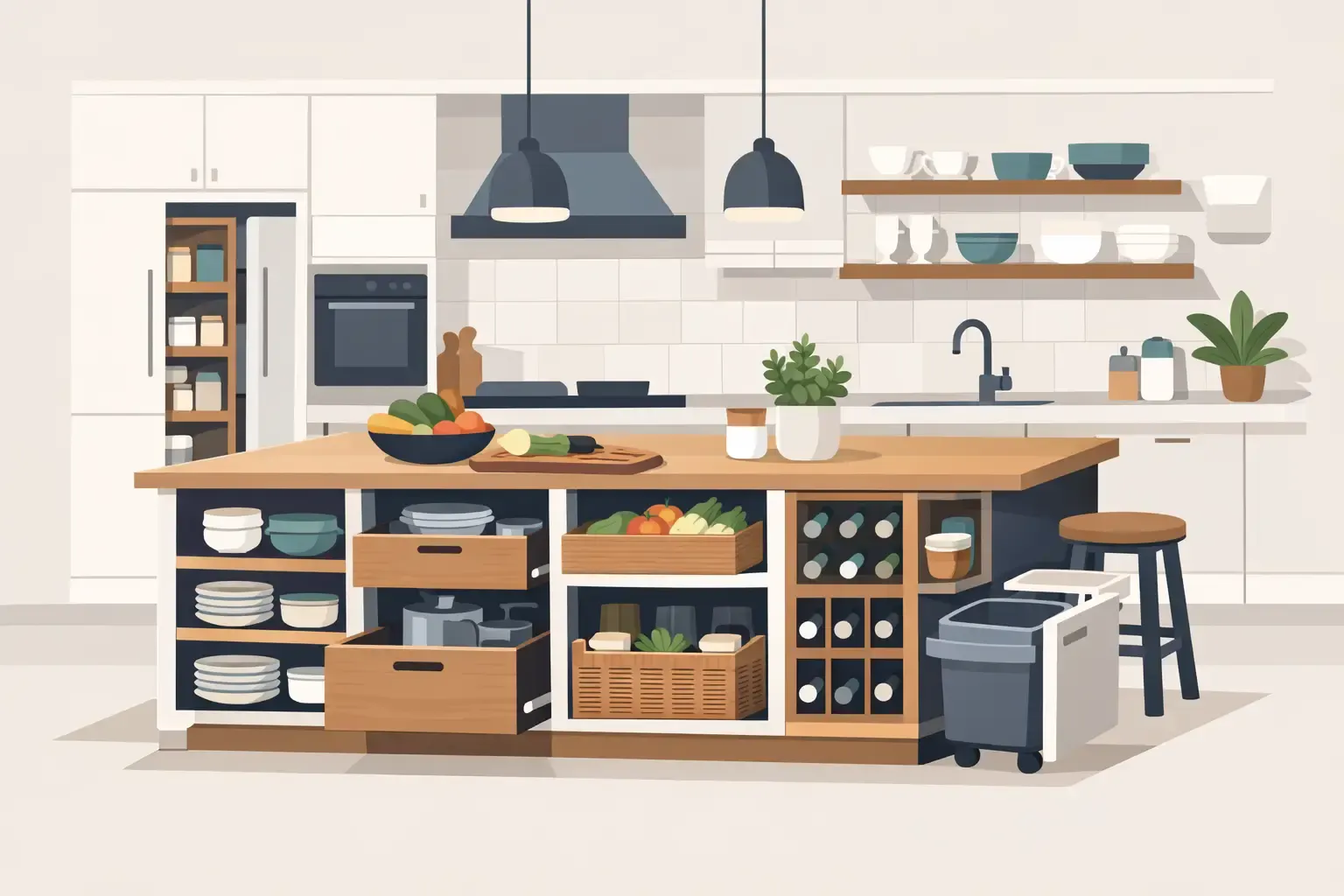
A kitchen island can be the most valuable piece of cabinetry in the room – or a beautiful surface with nowhere to put the things you use every day. The best kitchen island storage ideas start with real routines: where groceries land, how you prep dinner, where children reach for snacks, and what tends to collect on the countertop. When storage is planned around those moments, the island becomes a hardworking center for cooking, gathering, and enjoying your home.
For homeowners in Nashville, Brentwood, Franklin, and throughout Middle Tennessee, the right answer is rarely adding more cabinets at random. It is creating purposeful storage that suits the size of the kitchen, the style of the home, and the way your household actually lives.
Start With What Your Island Needs to Solve
Before choosing drawers, shelves, or specialty inserts, identify the friction in your current kitchen. Perhaps the countertops are crowded with small appliances. Maybe pots are difficult to reach, pantry items migrate to the island, or there is never a convenient place for serving pieces when guests arrive.
An island should not try to hold everything. Overloading it can make a kitchen feel heavy and limit knee space for seating. Instead, give it a clear job. A prep-focused island needs different storage than one designed primarily for entertaining, baking, or family breakfasts. This early decision is where a thoughtful cabinetry plan saves both space and frustration later.
Kitchen Island Storage Ideas for Everyday Use
1. Deep drawers for pots, pans, and lids
Deep drawers are among the most practical upgrades for an island. Unlike a standard lower cabinet, they bring cookware forward where you can see it instead of forcing you to crouch and search behind a door. A wide drawer near the cooktop can hold everyday pots and pans, while a fitted divider keeps lids upright and easy to grab.
This option works especially well in kitchens where perimeter cabinets have limited access or where a range hood and open shelving have reduced upper storage. Full-extension, soft-close hardware matters here. Heavy cookware puts real demands on drawer construction, so quality materials and installation are worth the investment.
2. A dedicated drawer for knives and prep tools
If the island is where you chop, mix, and assemble meals, keep the tools for those tasks directly below the work surface. A custom knife insert, utensil organizer, and shallow drawer for measuring cups or peelers reduce trips across the kitchen during dinner prep.
The trade-off is that this drawer needs to stay close to the prep zone. If the island has a sink, position it on the side where you naturally work, rather than placing it wherever a cabinet box happens to fit. Good kitchen design follows movement, not just symmetry.
3. Pull-out trash and recycling bins
A concealed pull-out waste cabinet makes cleanup quicker and keeps bags and bins out of sight. It is particularly useful beside an island sink or prep area, where vegetable scraps, packaging, and paper towels tend to pile up.
Choose a configuration with separate bins for trash and recycling, and leave enough width for the bin sizes your family actually uses. A smaller pull-out may preserve cabinet space, but it can become an annoyance in a busy household. For many families, a slightly wider cabinet is the better daily choice.
4. Narrow pull-outs for spices, oils, and cooking supplies
A slim pull-out cabinet can turn an otherwise overlooked section of the island into useful storage. It is a smart home for oils, vinegars, spices, baking sheets, or cutting boards, depending on the island’s location.
These narrow cabinets are best when they serve a specific purpose. They are not a cure for general clutter. If the island sits away from the range, storing every spice there may create more steps than it saves. In that case, use the pull-out for linens, wraps, or other items used at the island.
5. Vertical slots for trays and boards
Cookie sheets, serving trays, cooling racks, and cutting boards are awkward in standard cabinets. Vertical dividers keep them separated, visible, and simple to remove with one hand. A cabinet at the end of an island is often an ideal location because it is accessible without interrupting the main cooking path.
This is a small detail with an outsized effect. When flat items have a designated home, they stop becoming the first thing leaned against a wall or tucked into the oven.
6. A microwave cabinet that protects counter space
Moving the microwave off the counter instantly makes a kitchen feel calmer. An island microwave cabinet can be a good solution, particularly in an open kitchen where homeowners want clean sightlines and uninterrupted backsplash areas.
Placement requires care. A microwave set too low may be inconvenient for adults and less suitable for young children. Ventilation requirements, electrical access, and the appliance’s recommended clearances must also be addressed before cabinetry is built. This is one area where coordinated planning prevents expensive adjustments after installation.
7. Appliance storage with a lift or pull-out shelf
Stand mixers, food processors, and larger blenders can consume valuable counter space but are too heavy to lift from a high shelf. An appliance lift or sturdy pull-out shelf gives these items a concealed home at a comfortable working height.
This feature is ideal for households that bake often or use small appliances daily. For occasional-use appliances, a standard deep drawer may be the more budget-conscious choice. Custom details should earn their place by making life easier, not simply adding complexity.
Storage That Supports Hosting and Family Life
8. Open shelves for cookbooks and display pieces
Open shelving at the seating end of an island can soften the look of a large cabinet run. It provides a natural place for cookbooks, a few serving bowls, or meaningful pieces that add personality to the room.
Open storage does require editing. It looks best when it holds a small collection of attractive, useful items rather than a mix of loose papers and mismatched containers. If you prefer a more tailored, low-maintenance look, closed cabinetry may serve you better.
9. A serving cabinet near seating
For families who host holidays, casual dinners, or game-day gatherings, dedicate part of the island to serving pieces, placemats, and beverage supplies. Keeping these items near seating makes entertaining feel less like a scavenger hunt through the kitchen.
A shallow cabinet or a bank of drawers can work well for linens and flat serving pieces. Deeper storage is better for bowls, platters, and insulated drink tubs. The right mix depends on what you reach for when friends and family are in the home.
10. Charging drawers for the daily drop zone
Kitchen islands often become a landing place for phones, tablets, school papers, and charging cords. A charging drawer with integrated power keeps devices accessible without leaving cords stretched across the countertop.
This is especially helpful in family kitchens, but it should be planned with safety in mind. Keep power away from wet areas, use appropriate electrical components, and allow enough room inside the drawer for cords without pinching them.
11. Pet-friendly storage
A pull-out drawer for pet food, bowls, or treats keeps supplies neatly contained while making feeding time more convenient. In a busy kitchen, this simple feature can prevent large food bags from taking over a pantry floor.
Consider where pets tend to wait during meal preparation. A feeding station placed in the path between the refrigerator and range may create congestion. An island end or a less-traveled side can be a more comfortable choice for both people and pets.
12. Hidden storage at the back of the island
The side of the island facing a living or dining area is often underused. Shallow cabinets, concealed doors, or carefully designed shelving can hold board games, seasonal table décor, extra candles, or items that do not belong in the cooking zone.
This approach is particularly valuable in open-concept homes, where the kitchen has to work as part of the larger living space. Matching the island cabinetry to the room’s architectural style keeps this added function from looking like an afterthought.
Make the Cabinet Construction Match the Job
Storage ideas only work as well as the cabinetry behind them. Deep drawers need strong drawer boxes and dependable slides. Pull-outs need precise alignment. Specialty inserts need dimensions based on the items they will hold, not generic assumptions.
Material selection also affects how an island holds up. Solid wood cabinetry and carefully built millwork offer long-term strength and a refined appearance, while thoughtfully selected stock cabinetry can provide a more budget-conscious path to an organized, attractive kitchen. The best choice depends on your priorities, timeline, and how much customization the space requires.
A clear design plan should account for plumbing, electrical needs, appliance specifications, walkway clearances, and seating overhangs before cabinet production begins. Those details may not be the glamorous part of a remodel, but they are what make a finished island feel easy to use for years.
A well-planned island does more than hide clutter. It gives every daily task a more natural place to happen, leaving you with a kitchen that feels ready for weeknight dinners, quiet mornings, and a full house of people you love. Tom Bell Cabinetry & Custom helps Middle Tennessee homeowners shape those details into cabinetry that is designed for real life and built with confidence.
Planning a Kitchen Remodel in Middle Tennessee?
Our kitchen remodeling service in Nashville keeps the cabinetry in-house: designed, built, and installed by one crew out of our Madison, TN shop. See our custom cabinet work, or talk through built-in storage for the rest of the house.
Call (615) 469-2781 to book a consultation.