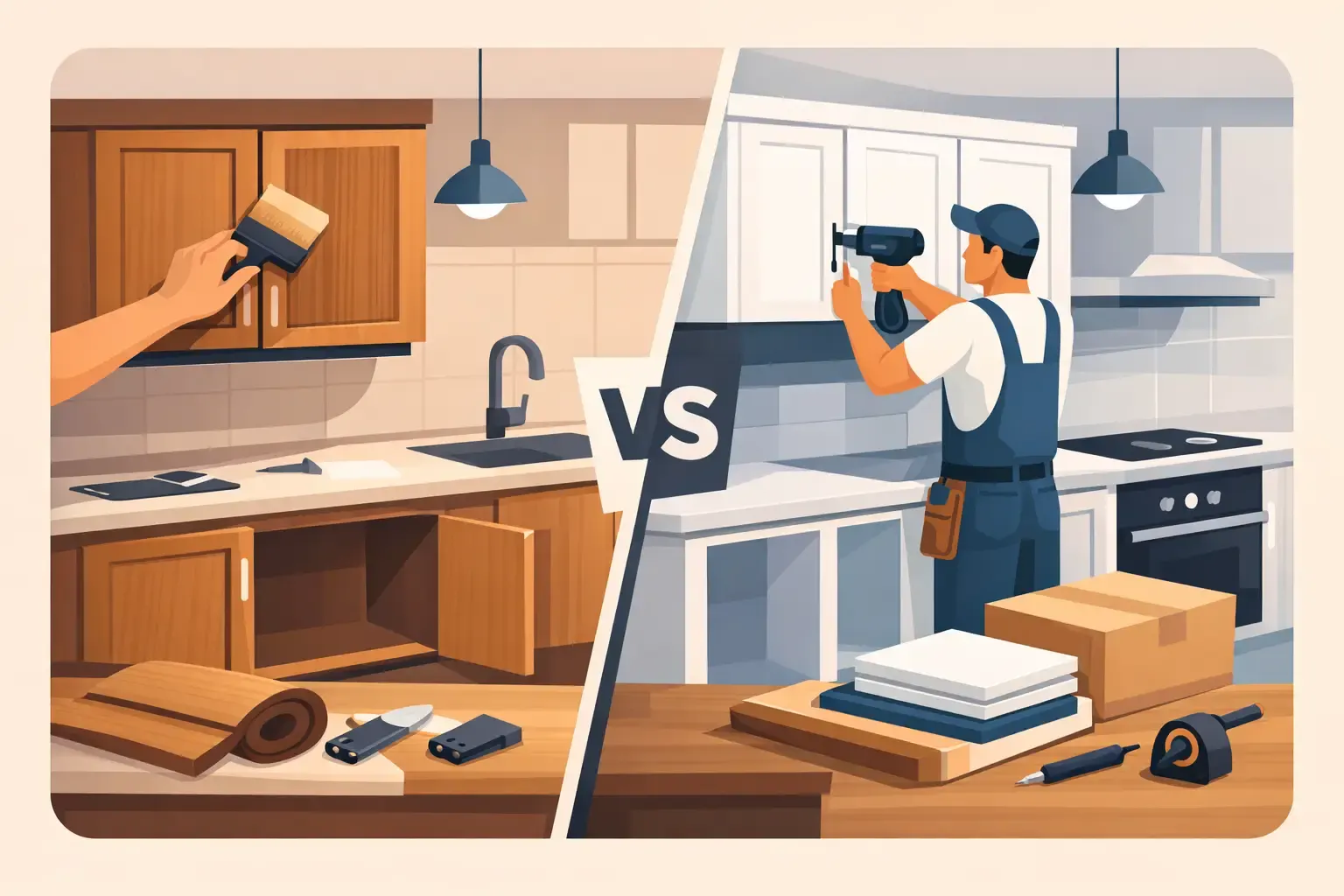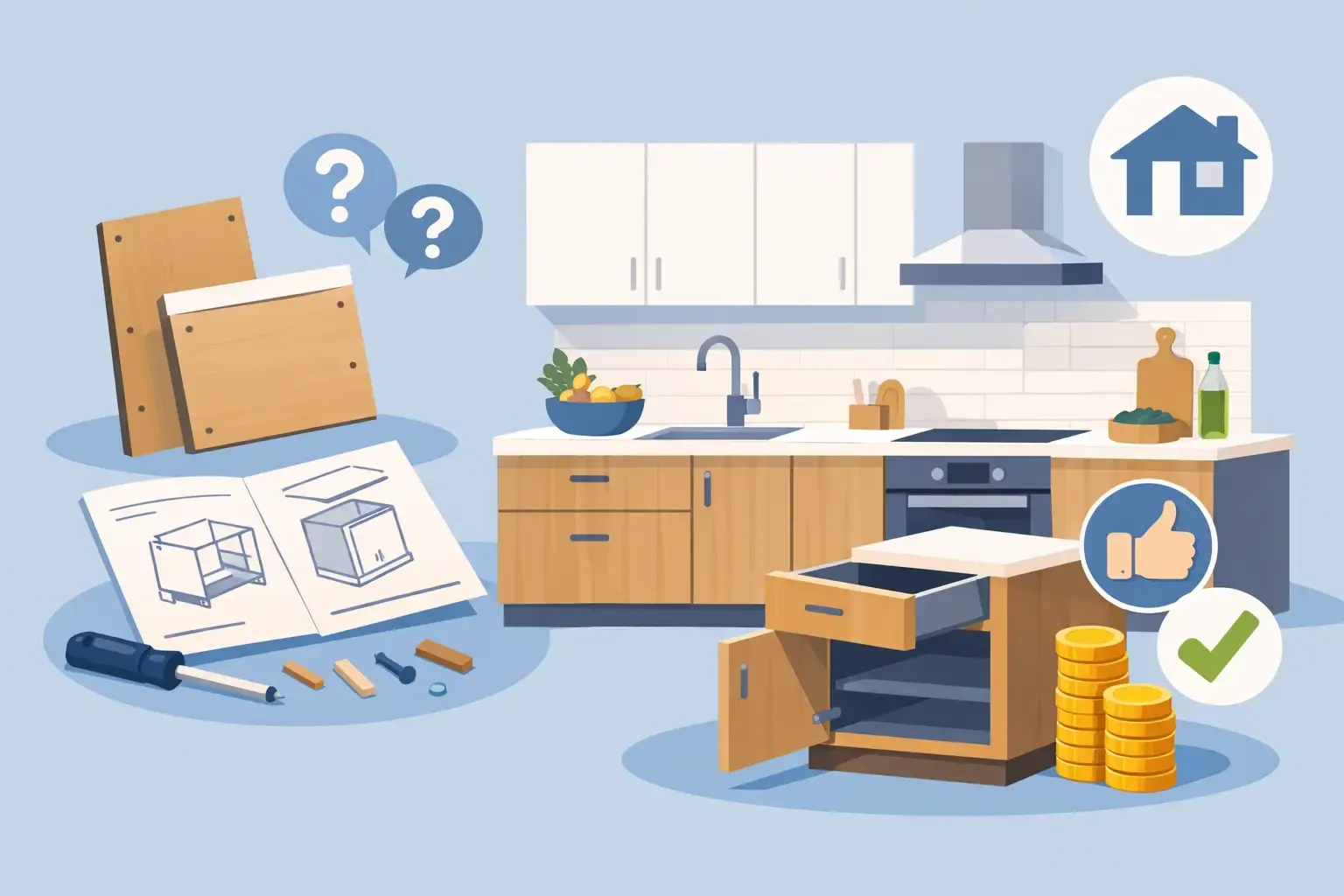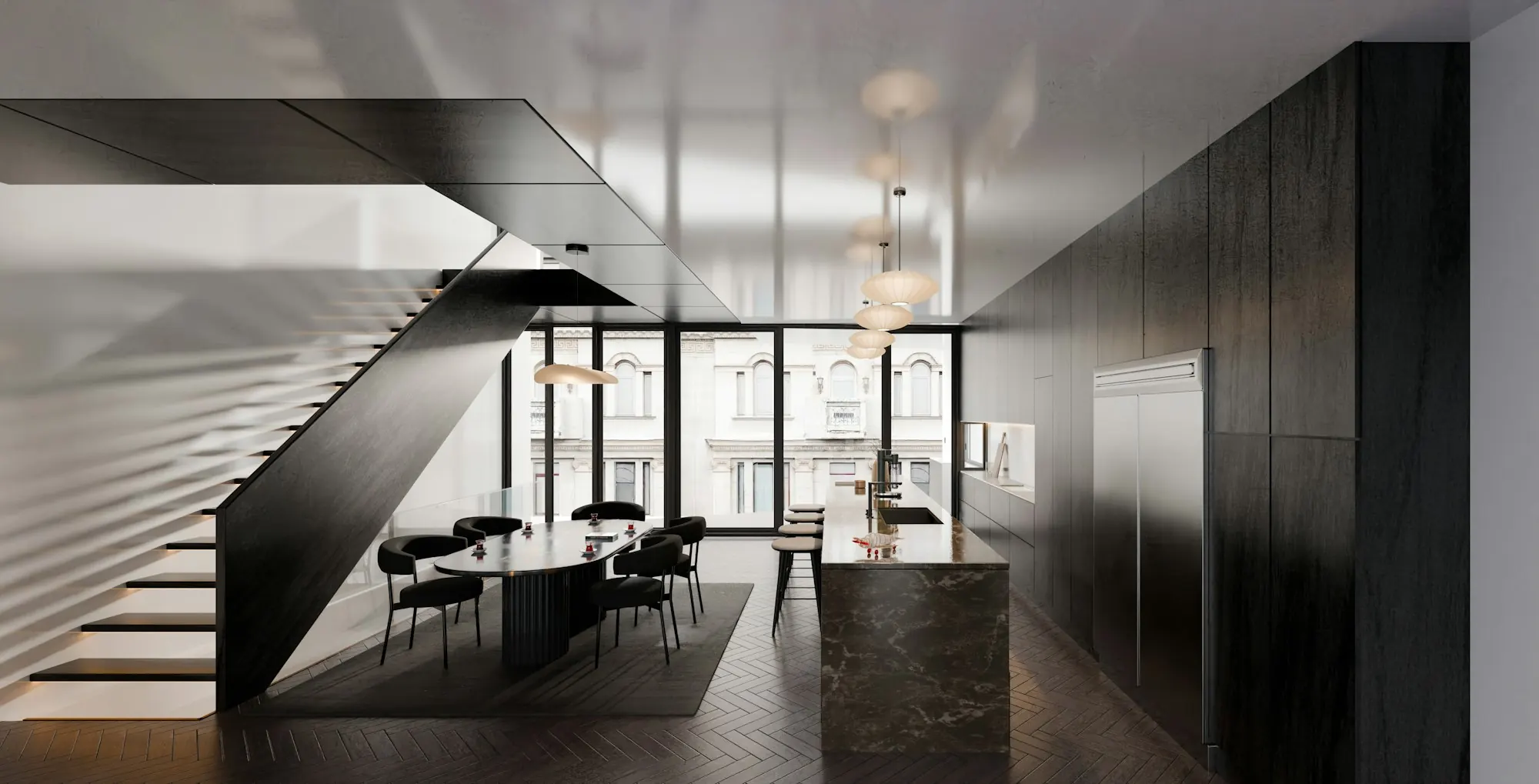
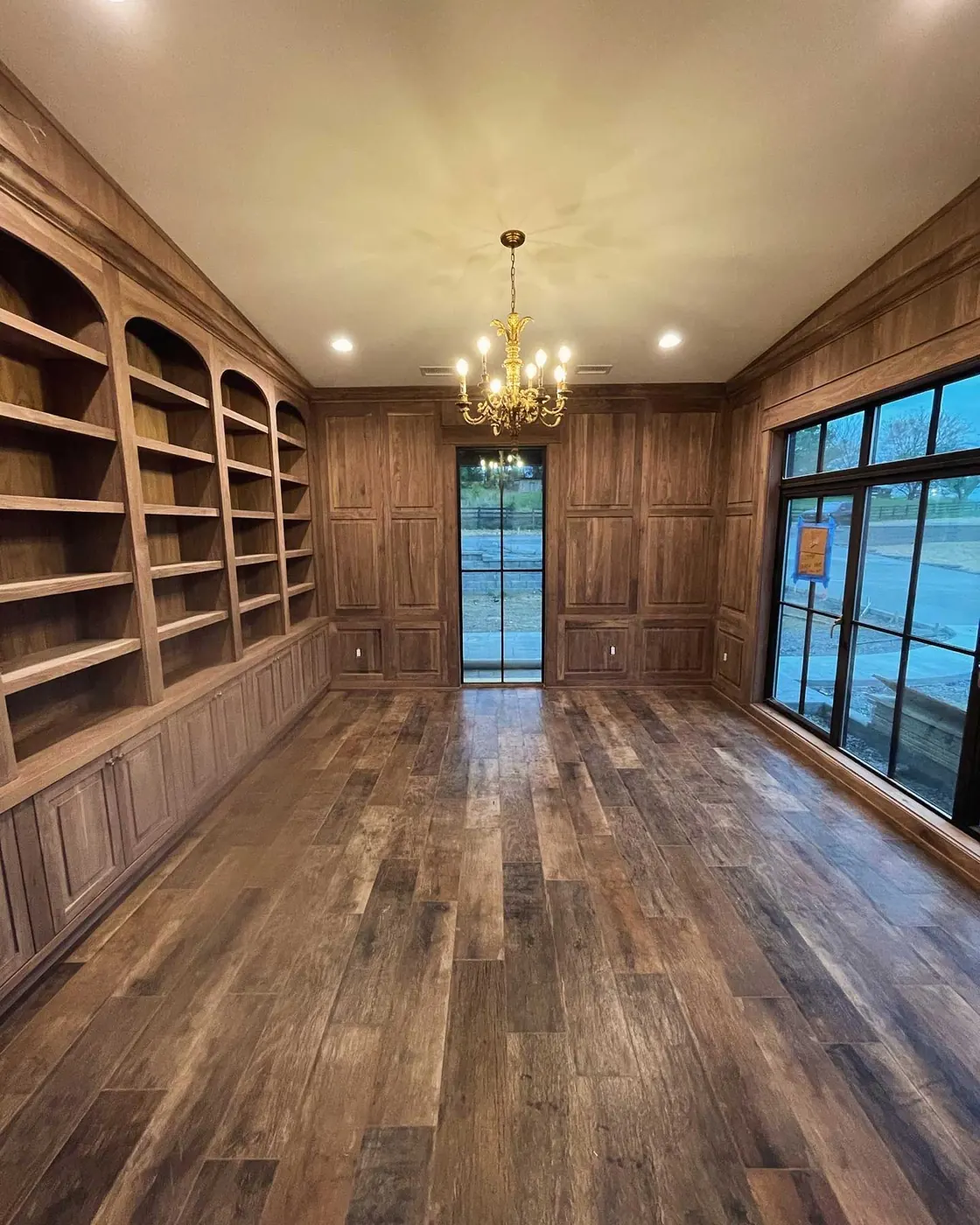

A cabinet door can look beautiful in a showroom and still hide a box that will sag, swell, or loosen after a few busy years at home. That is why learning how to compare cabinet construction quality matters before you choose a style, color, or price point. The right cabinets should not only photograph well on installation day. They should support the way your family cooks, gathers, stores, cleans, and lives.
For Nashville-area homeowners, cabinet quality is not a one-size-fits-all question. A fully custom solid-wood kitchen and a well-selected ready-to-assemble cabinet package serve different budgets and timelines. The goal is to understand what you are getting, where the trade-offs are, and whether the construction matches your plans for the home.
Start With the Cabinet Box
The cabinet box, also called the carcass, does most of the structural work. Doors and drawer fronts get the attention, but the box determines how well the cabinet holds its shape under the weight of dishes, cookware, countertop materials, and daily use.
Look for cabinet sides, bottoms, and shelves made from furniture-grade plywood when your budget allows. Plywood is built in layers, which gives it strength and helps it resist sagging. It also typically handles the humidity changes common in Middle Tennessee homes better than lower-density materials.
Particleboard and medium-density fiberboard can be appropriate in certain applications, particularly for budget-conscious projects or painted components. The question is not whether these materials are automatically bad. It is whether they are being used in the right place and at an honest price. High-quality engineered panels can perform well in dry, protected areas, while thin, low-density particleboard is more vulnerable to moisture damage and stripped hardware holes.
Ask about panel thickness, too. A thicker cabinet side or shelf generally provides better support. This becomes especially important for wide pantry cabinets, long floating shelves, and base cabinets that will carry heavy stone countertops.
Check the Back Panel and Shelf Support
A full-thickness back panel adds rigidity to a cabinet box and gives installers a secure surface for fastening cabinets to wall studs. Thin backs can be functional in some stock cabinet lines, but they require careful installation and adequate hanging rails. If a contractor cannot clearly explain how cabinets will be secured, that is worth discussing before work begins.
Shelves should feel stable, not flimsy or bowed. Adjustable shelves are convenient, but their quality depends on both the shelf material and the supports holding them. Metal shelf pins and solid shelf edges tend to hold up better than lightweight plastic hardware in heavily used cabinets.
How to Compare Cabinet Construction Quality at the Corners
Joinery is the way cabinet parts are connected. It may sound like a detail reserved for woodworkers, but it is one of the clearest signs of how a cabinet will age.
For cabinet boxes, look for solid mechanical connections such as dado joints, dowels, screws, or well-executed cam-lock systems in quality RTA cabinetry. Custom cabinetry may use more traditional woodworking methods, while factory-made cabinets often use efficient modern construction. Either can be dependable when the joints are precise, reinforced where needed, and assembled correctly.
Be cautious when a cabinet seems to rely mostly on staples, glue, or very thin fasteners at stress points. These methods may reduce manufacturing cost, but they can lead to loosening as drawers are opened, doors are adjusted, and the home naturally shifts over time.
A good question to ask is simple: how are the cabinet sides, bottom, and back connected, and what is reinforcing the corners? A qualified cabinetry professional should be able to answer in plain language.
Test Drawers and Doors Like You Will at Home
Drawers reveal a great deal about cabinet quality because they take constant use. Open them fully, close them several times, and notice whether the movement is smooth and controlled. A quality drawer should not rack side to side, scrape against the box, or stop short when fully extended.
Dovetail drawer construction is a classic sign of craftsmanship, especially in solid-wood drawers. The interlocking joint is strong and attractive, making it a valuable feature in premium and custom cabinetry. However, dovetails alone do not guarantee a better kitchen. A well-built drawer with durable materials, strong bottom support, and high-quality slides can be an excellent choice in a more modest budget range.
Pay close attention to the drawer bottom. Thin bottoms can flex under the weight of pots, small appliances, or stacks of dishes. This is particularly relevant for deep drawers, which many homeowners prefer over lower cabinets with fixed shelves.
For drawer slides and door hinges, soft-close hardware adds comfort and helps reduce repeated impact. Look for reputable, adjustable hardware that can be tuned after installation. Doors should align evenly with consistent gaps. They should not rub, drift open, or require a hard push to close.
Look Beyond the Door Style
Cabinet doors have their own construction story. Solid wood doors offer warmth, character, and the opportunity for custom profiles and stain finishes. They can expand and contract slightly with seasonal humidity, which is natural. A skilled cabinetmaker accounts for that movement during construction.
Painted doors are often made from solid wood, engineered wood, or a combination of materials. MDF can create an exceptionally smooth painted finish and is a practical choice for detailed routed door profiles. Solid wood may show subtle movement at joints over time, especially with painted finishes. Neither choice is universally superior. Your preferred look, finish, budget, and tolerance for natural material variation all matter.
Inspect door edges and center panels closely. The finish should be even, with no rough spots, cracking, bubbling, or visible gaps. On thermofoil or laminate doors, check that the coating is tightly bonded at corners and edges. In a kitchen, heat, steam, and cleaning products will test those surfaces every day.
Compare the Finish for Real-Life Durability
A finish needs to do more than provide the right color. It should protect the cabinetry from fingerprints, splashes, cleaning, and normal wear.
Ask what type of finish is used and how it is applied. Factory-applied finishes can be very consistent, while custom finishing allows for more control over color matching, sheen, glazing, and specialty details. In either case, the surface should feel smooth and look consistent across doors, drawer fronts, panels, and trim pieces.
Consider where your kitchen receives direct sunlight. Dark stains and richly colored paints may fade over time in bright areas, while very matte finishes can show marks more readily than a low-sheen finish. A good design plan accounts for the beauty you want and the maintenance you are comfortable with.
Judge the Installation Plan, Not Just the Cabinet Sample
Even beautifully made cabinets can underperform if installation is rushed. Cabinet construction quality and installation quality work together.
Before selecting a cabinet package, ask how the room will be measured, how walls and floors will be evaluated, and how the installer will handle out-of-level or out-of-plumb conditions. Older Nashville homes often have character, but that character can include uneven surfaces that require careful scribing, shimming, and trim work.
Cabinets should be fastened securely to framing, leveled across the run, and aligned before countertops are installed. Finished end panels, filler strips, crown molding, and toe kicks should look intentional rather than improvised. These details are where a kitchen starts to feel tailored to your home instead of simply placed inside it.
Match the Construction Level to Your Investment
The best cabinet is not always the most expensive one. A starter home renovation, rental property, quick resale project, and forever kitchen have different priorities. The key is to avoid paying custom-level pricing for entry-level construction or expecting a budget stock cabinet to offer every feature of a handcrafted cabinet.
Custom, 100% solid-wood cabinetry can make sense when you need uncommon dimensions, want architectural millwork, value long-term repairability, or have a specific vision that stock sizes cannot achieve. Quality stock and RTA cabinets can be a smart choice when the layout is straightforward, the timeline is tighter, and the product has strong boxes, dependable hardware, and careful installation.
Request a clear estimate that identifies the cabinet line, materials, door construction, hardware, finish, installation scope, and any upgrades. Clarity at this stage protects your budget and prevents disappointing surprises later.
Your kitchen should feel like a place you are proud to welcome people into, not a collection of compromises you notice every morning. Bring samples, questions, and your real-life priorities to the conversation. A trusted local cabinetry partner, such as Tom Bell Cabinetry & Custom, can help you compare the options honestly and choose construction that feels right for your home, your timeline, and the years ahead.
Built in Nashville, Not Shipped in a Box
Tom Bell Cabinetry builds custom cabinets in Nashville, TN in our own Madison shop, using solid hardwood, plywood boxes, and a crew that measures, builds, and installs the same job. We also handle architectural millwork and custom built-ins across Middle Tennessee.
Call (615) 469-2781 for a free estimate.